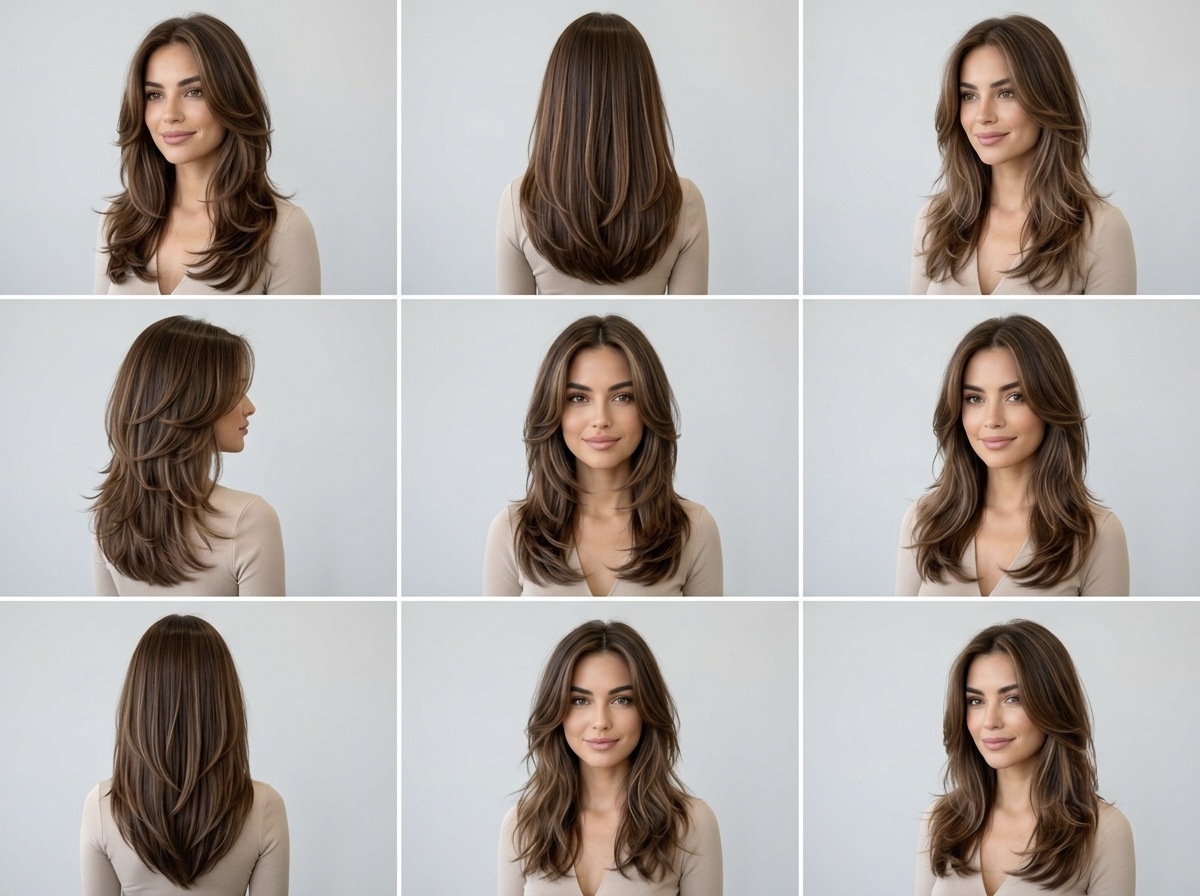
Stepping into a salon without precise visual vocabulary often leads to frustrating results. Asking your stylist for generic "movement and volume" without clarifying perimeter density or internal graduation can result in choppy, uneven layers that require forty-five minutes of intense round-brush styling every morning just to look presentable.
Achieving natural, low-maintenance bounce starts with understanding how specific cutting techniques interact with your natural hair density, texture, and daily styling capacity. Layers should do the mechanical work for you, removing bulk where your hair expands and building lift where it tends to fall flat. Below is an editorial breakdown of the nine most requested layered haircuts of the season, detailing how each cut operates and how to choose the right one for your daily routine.
The 9 Most Requested Layered Cuts and How They Function
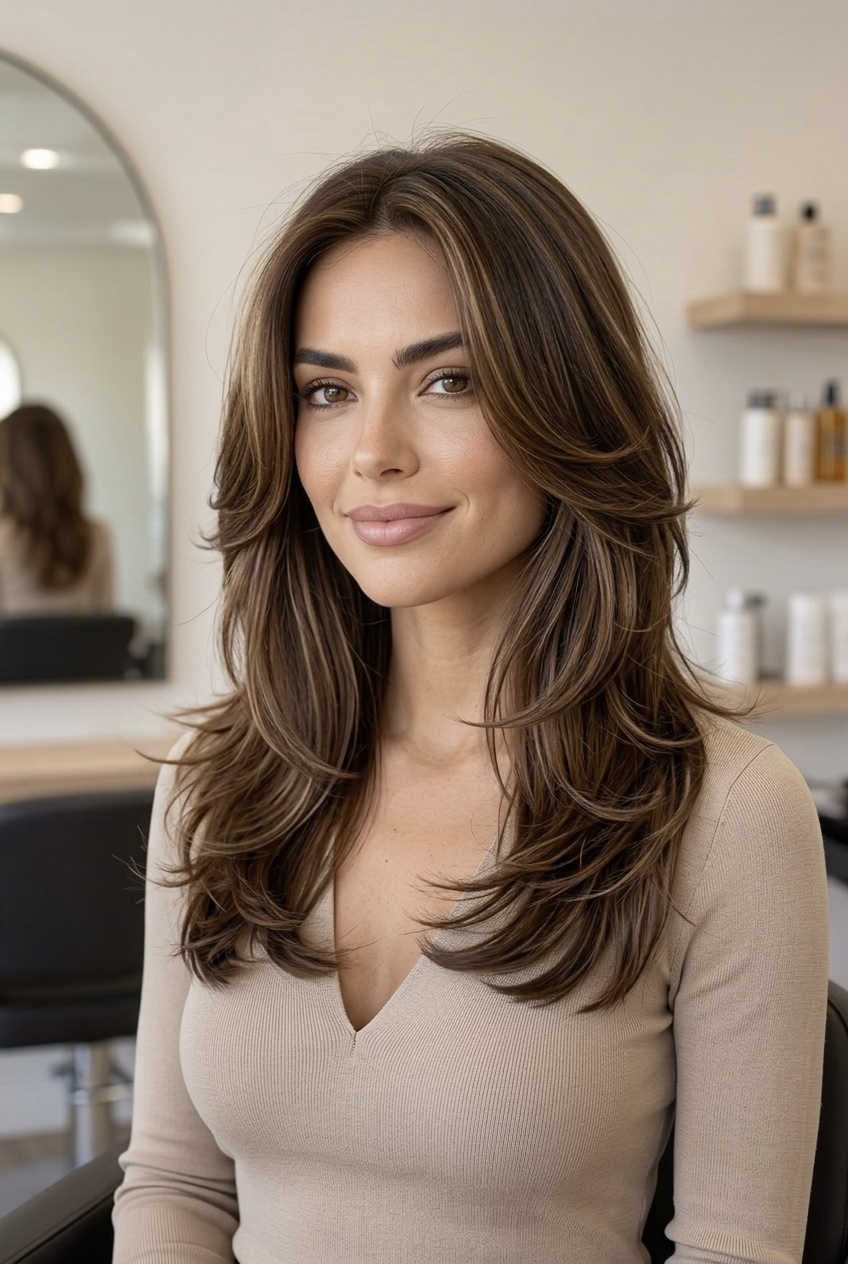
1. Butterfly Layers (Crown Lift with Preserved Perimeter)
The butterfly cut has become a modern classic for high-volume styling because it pairs very short interior layers around the crown with cascading, full-density length below the shoulders.
The shorter top tiers are cut to fall around the cheekbones and chin, releasing weight from the top of the scalp and encouraging immediate root lift without requiring teasing. The lower section retains baseline density so your perimeter does not look stringy. A major styling benefit of this cut is versatility: pulling the long back section into a low bun or claw clip lets the shorter crown layers fall forward naturally, creating the visual appearance of a full, bouncy faux blowout bob. It performs best on medium to thick hair that can afford significant internal graduation.
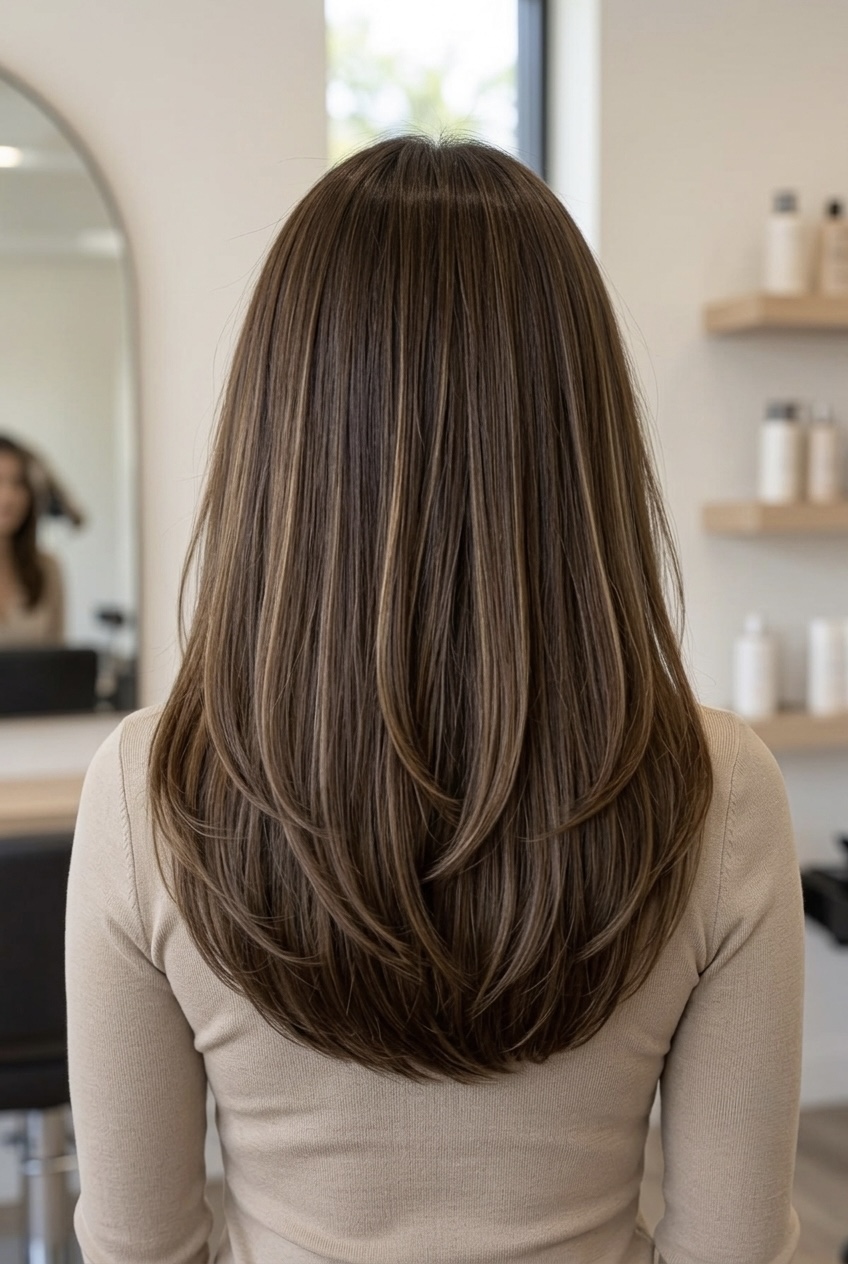
2. U-Shape Layers (Balanced Weight Distribution)
For minimalists who prioritize sleek, uninterrupted symmetry, the U-shape cut curves the perimeter into a soft, blended arch across the back rather than cutting straight across in a blunt horizontal line.
By softening the corners where the sides meet the back, this perimeter prevents heavy, dense hair from forming a bulky triangular shape around the shoulders. The shorter side pieces sweep backward naturally when you walk, preventing the front panels from pooling forward awkwardly over your collarbones. This cut preserves maximum perimeter thickness while adding gentle movement, making it universally flattering for both straight and wavy textures.
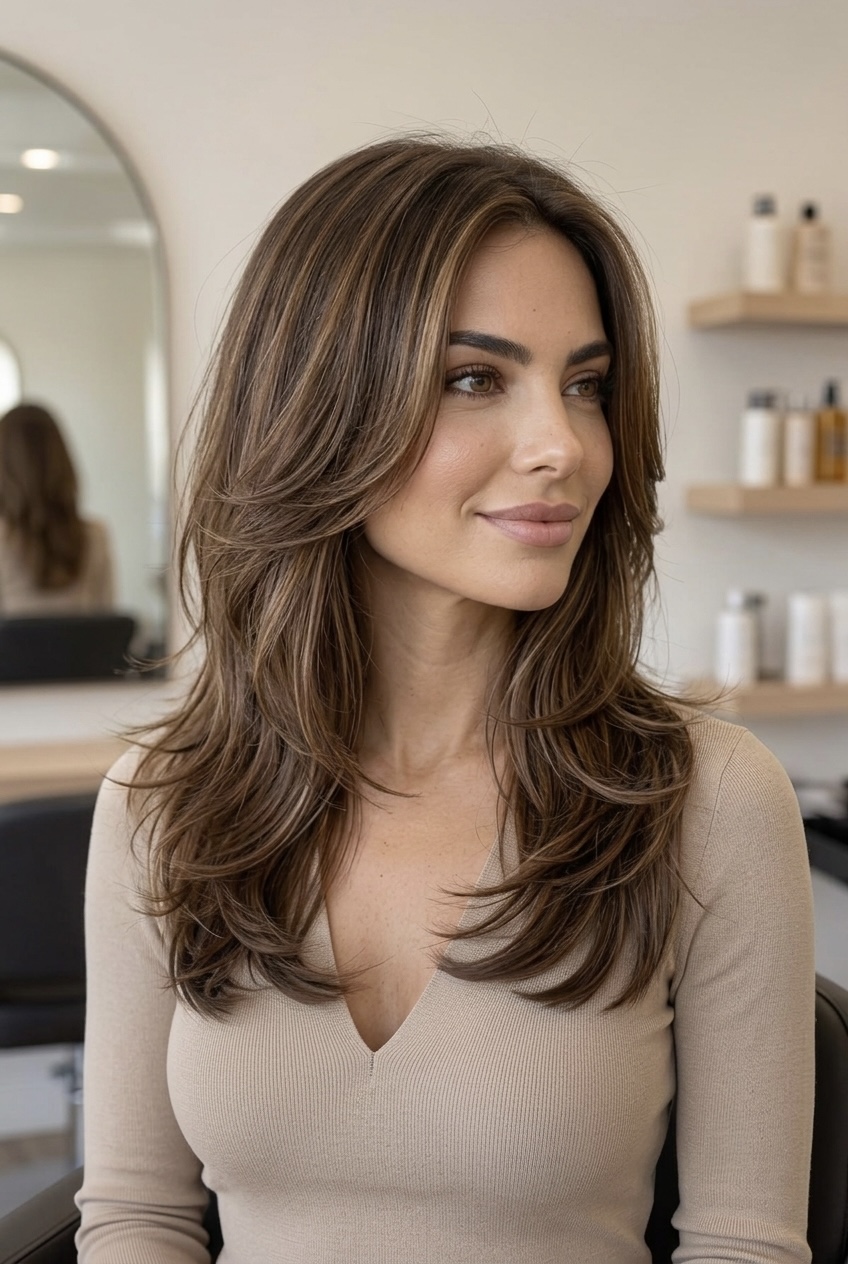
3. Feathered Layers (Weightless Edge Texturizing)
Drawing inspiration from 1970s salon texturizing, feathering shifts focus away from heavy crown tiers and concentrates almost exclusively on blending the bottom two to three inches of the hair shaft with a razor or fine shear point-cutting.
Instead of creating distinct, bulky tiers of volume, feathered tips fan outward softly in light, wispy layers. This technique is especially valuable for fine or low-density hair: cutting short, heavy interior layers on fine strands often leaves the bottom perimeter looking thin and sparse, whereas feathered ends introduce flexibility and softness while keeping the baseline looking thick and healthy.
4. The Step Cut (Architectural Tiered Volume)
Unlike blended layers that transition invisibly down the back, a step cut leaves distinct, deliberate gaps between length tiers, creating visible structural "steps" throughout the hair body.
This cut is engineered for structured styling. When blown out with a large ceramic round brush or set on thermal velcro rollers, each separate step stacks on top of the tier below it, generating unmistakable 1990s-inspired volume that holds its shape throughout the day. Because the transition lines are explicit, step cuts require consistent styling effort and work best on medium to thick hair with a smooth or relaxed texture.
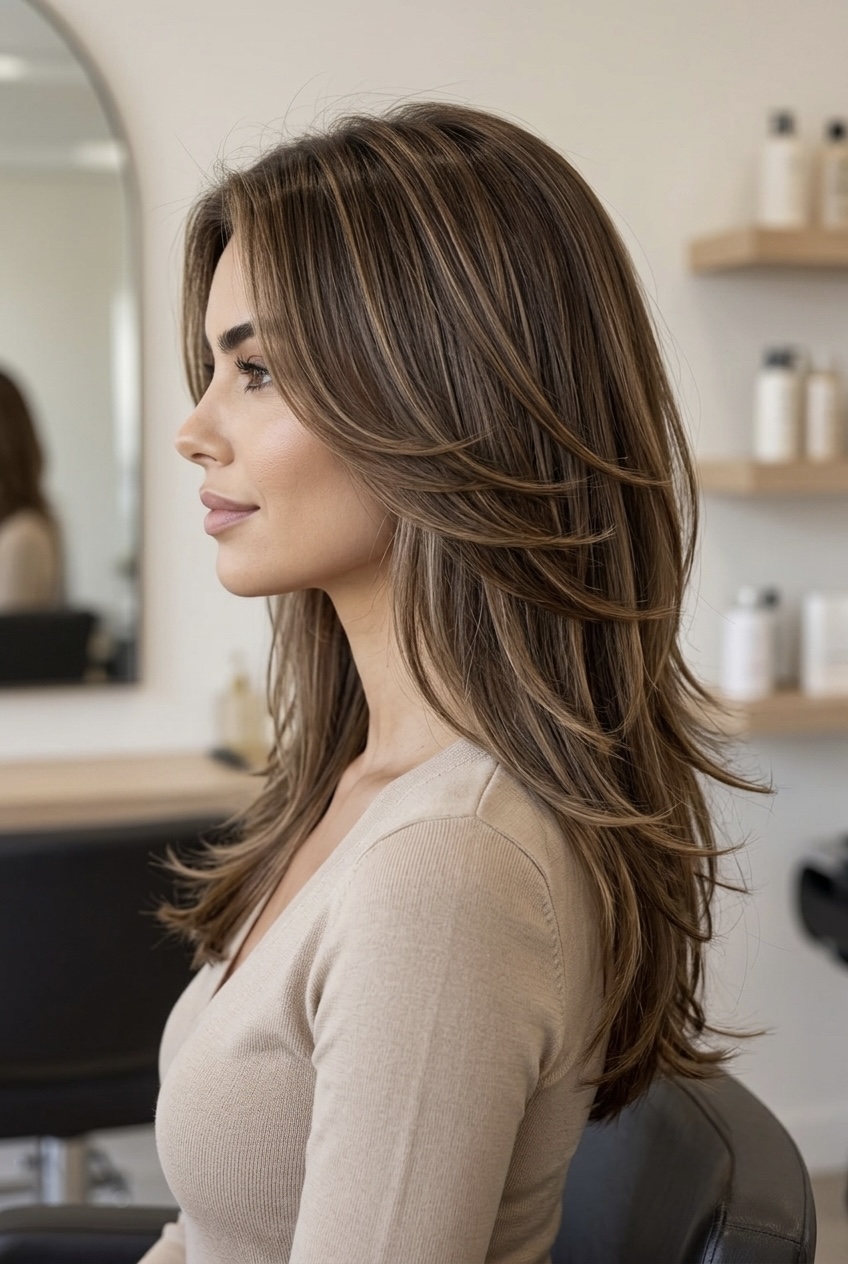
5. Face-Framing Layers (Bone Structure Contouring)
If you want a noticeable refresh without sacrificing an inch of your overall length in the back, targeted face-framing pieces offer the cleanest solution.
These layers generally begin at the cheekbones, chin, or collarbones, cascading downward along the jawline in a gradual diagonal taper. By framing the perimeter of the face, they highlight bone structure, draw focus directly to your eyes, and soften a square or round jawline. When you sweep your hair back into an everyday ponytail or messy topknot, these front pieces fall out naturally to frame your face without requiring extra effort.
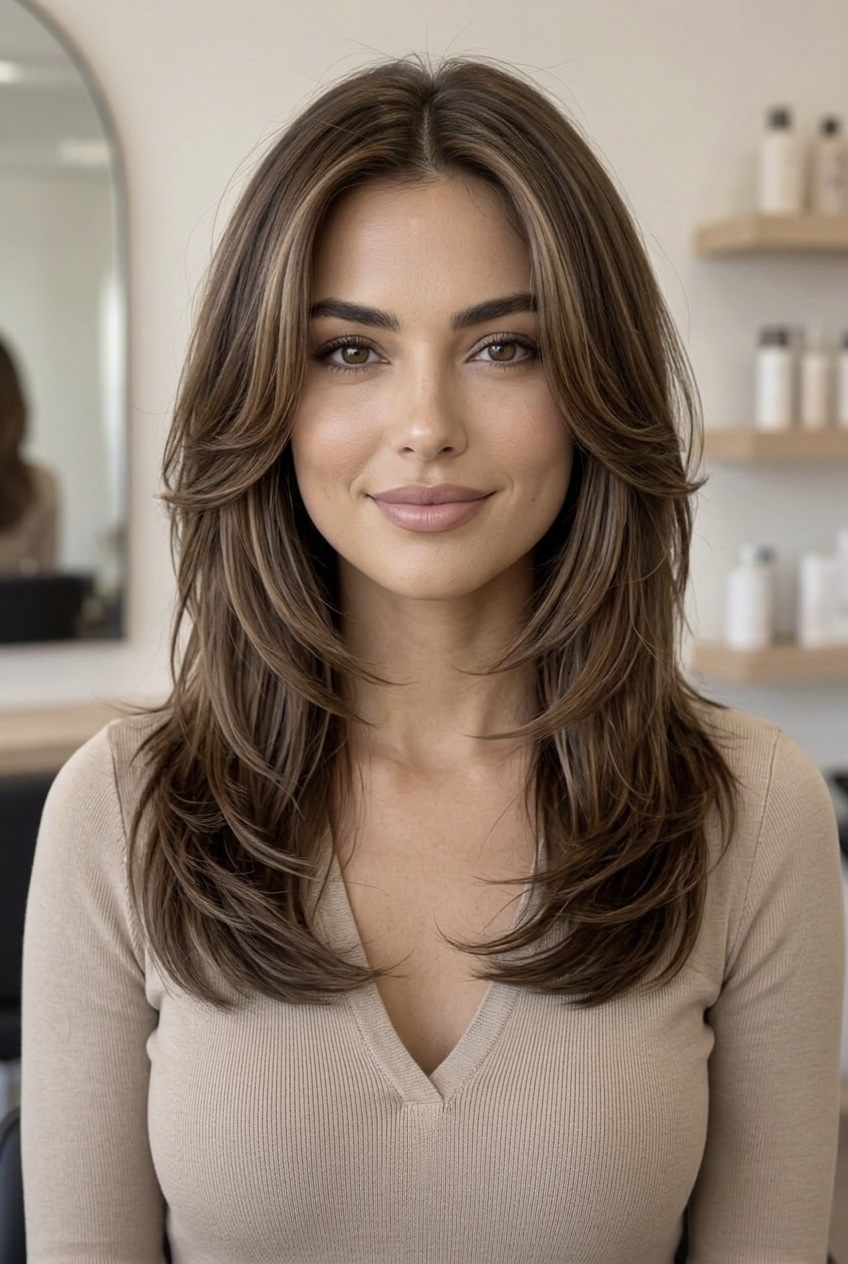
6. Curtain Layers (Sweeping Center-Part Dimension)
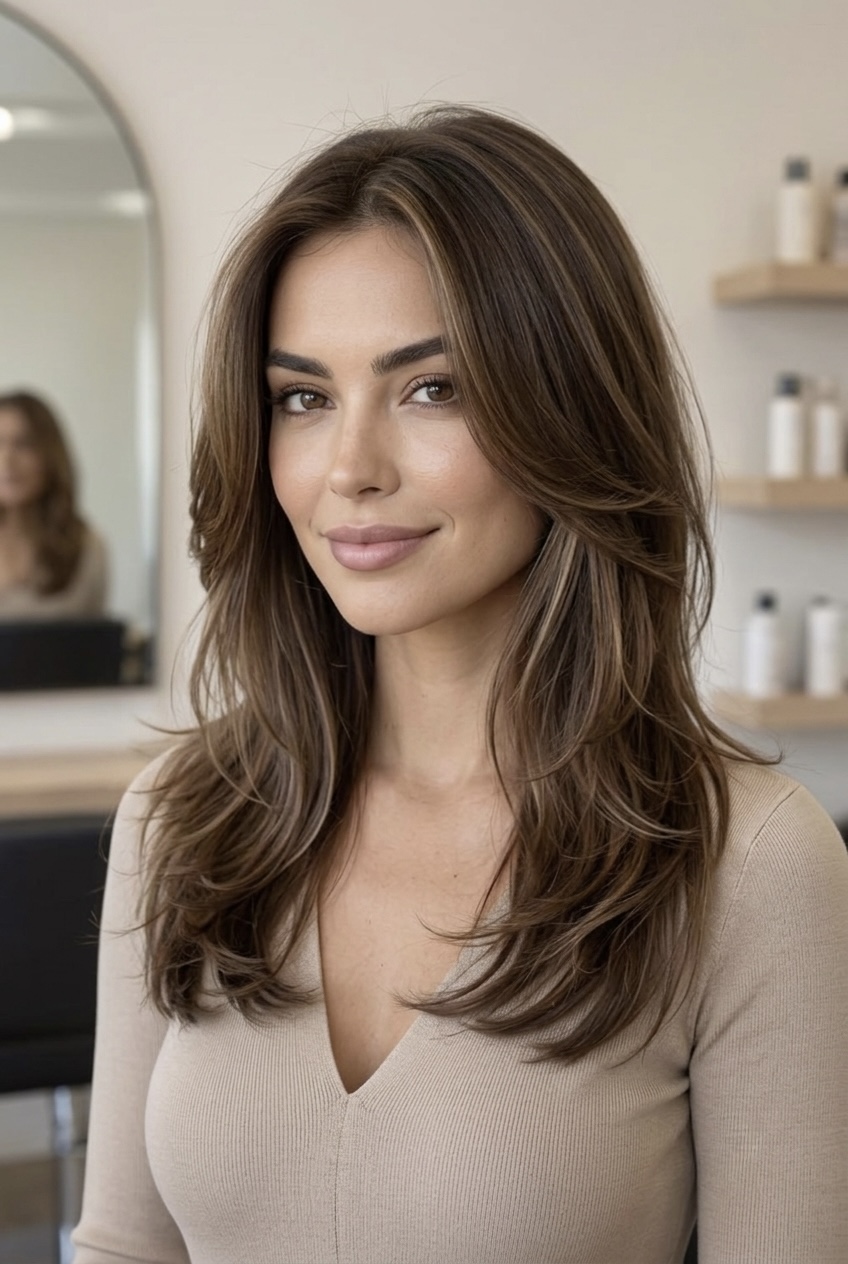
Cut specifically to complement a clean middle part, curtain layers mirror the outward, sweeping arch of signature curtain bangs.
The layers start shorter near the bridge of the nose or cheekbones and taper outward and downward toward the collarbones. This outward curve draws the eye laterally, opening up the forehead and cheek areas while allowing the lengths to sweep backward effortlessly with the breeze. It requires minimal styling: simply blowing the front pieces backward over a round brush for thirty seconds gives you that casual, salon-fresh sweep.
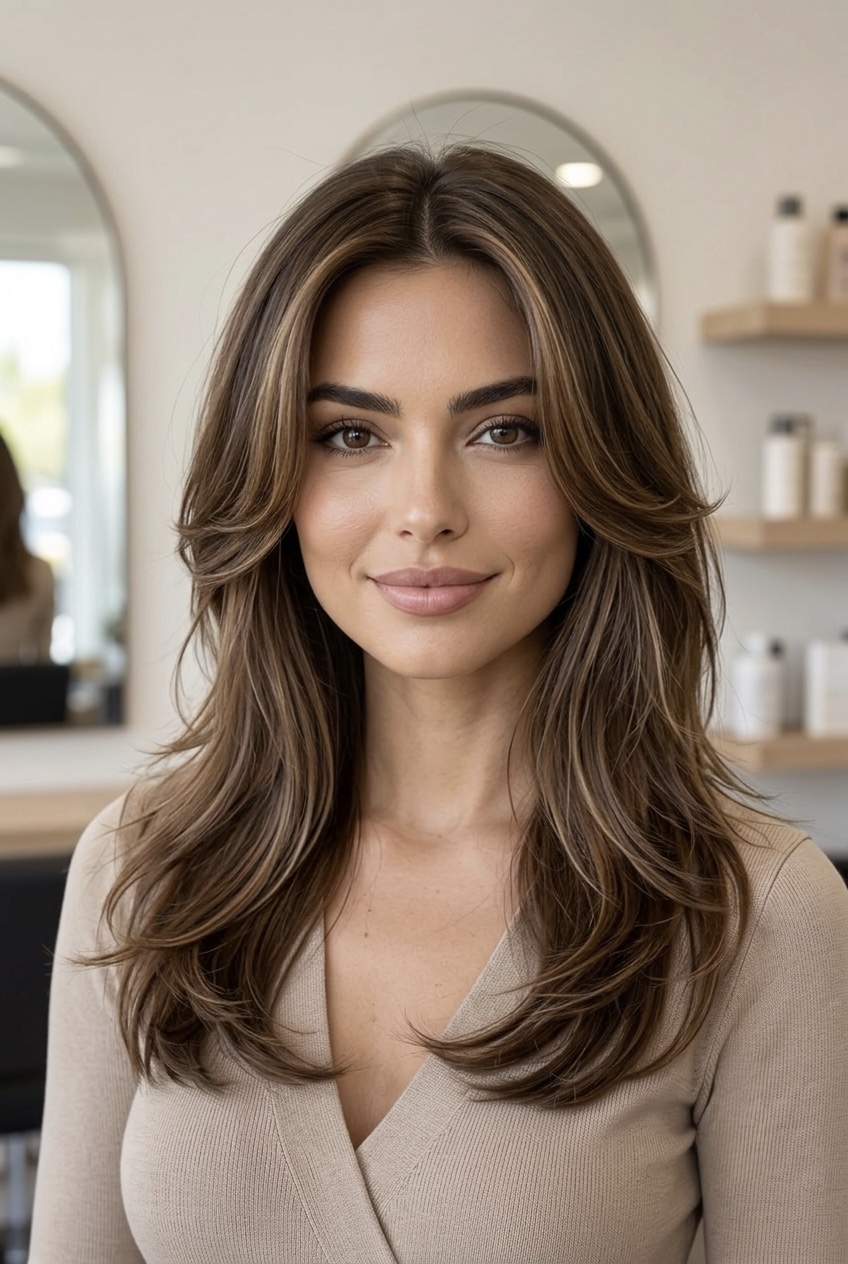
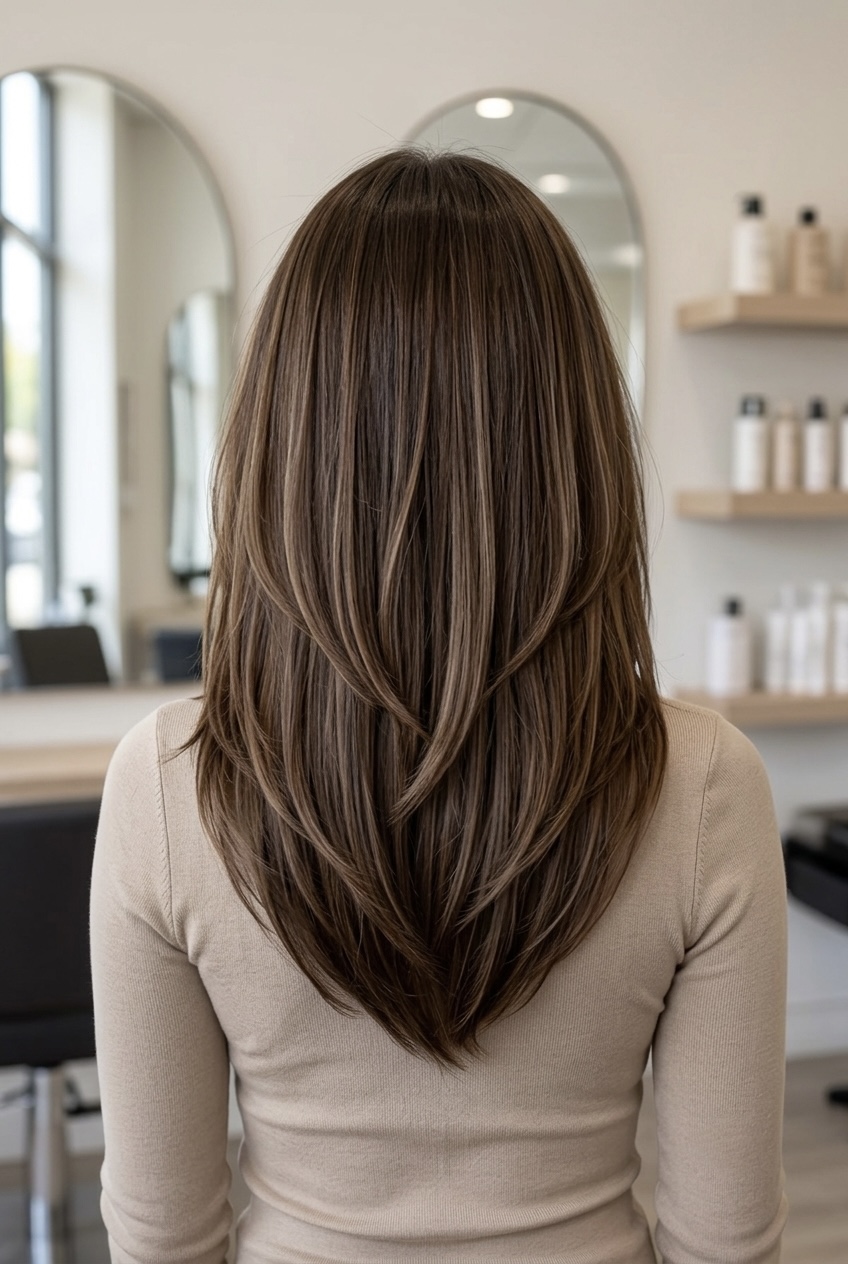
7. V-Shape Layers (Dramatic Waterfall Length)
For anyone who loves noticeable drama down the back, a V-shape cut tapers the sides at a steep, sharp diagonal down to a single defined point at the center of the spine.
This cut concentrates texturized weight directly down the middle, creating a cascading waterfall silhouette that visually elongates the torso from behind. Because the side perimeters are cut significantly shorter than the back point, it removes substantial weight from around the shoulders, allowing thick, heavy hair to feel noticeably lighter. Fine hair types should approach this cut with caution, as removing that much corner weight can leave the sides looking thin.
8. Korean Sliced Layers (Invisible Interior Body)
The Korean interior texturizing method has gained worldwide popularity because it prioritizes hair health, clean lines, and an air-dry-and-go finish.
Instead of cutting visible steps into the exterior canopy, the stylist uses fine slide-cutting shears on the interior layers underneath the top surface. This removes hidden pockets of bulk and introduces body that pushes the outer hair upward, creating natural movement without leaving any visible cutting lines on the surface. It is ideal for straight, glass-like hair that tends to look choppy or damaged under traditional exterior layering techniques.
9. Blended Soft Layers (The Conservative Transition)
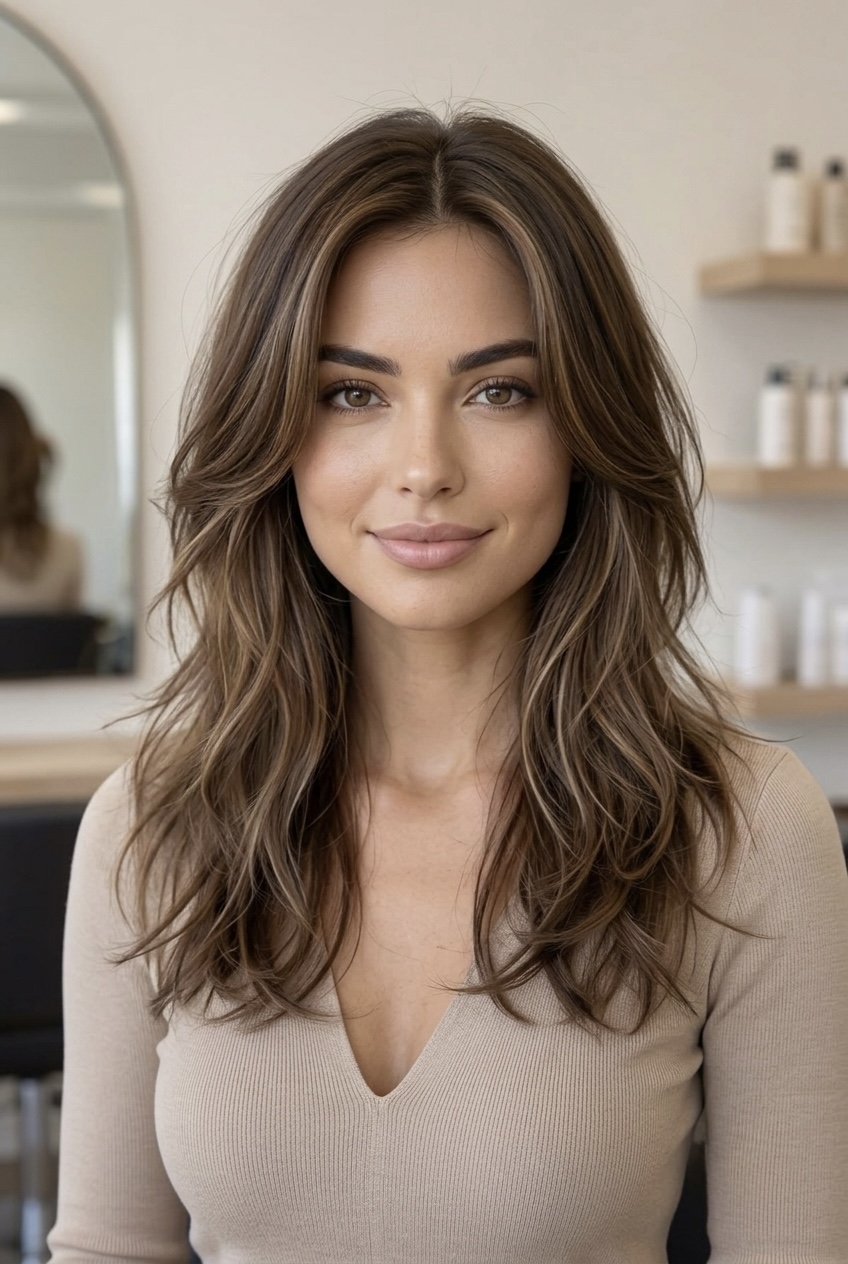
If you are experiencing layer hesitation or trying out dimension for the first time, soft blended layering is the safest, most forgiving choice.
The layers are cut with subtle, low-elevation graduation, blending seamlessly into the baseline body of the hair. It introduces just enough flexibility to stop a blunt haircut from feeling boxy or static, while keeping your perimeter solid and full. If you decide you want to return to a blunt cut later, soft layers grow out evenly without requiring an awkward transitional trim.
Common Layering Mistakes to Avoid
- Over-Graduating Fine Strands: Cutting too many short tiers into fine or low-density hair removes the weight needed to keep the ends looking healthy and thick, leading to stringy tips. Ask your stylist for soft blended layers, subtle face-framing, or invisible interior texturing instead.
- Ignoring Your Daily Styling Routine: High-tier step cuts and butterfly layers require active round-brush heat styling or velcro rollers to reach their intended shape. If your morning routine consists entirely of air-drying and walking out the door, choose Korean layers or a soft U-shape cut.
- Product Overload at the Roots: Drowning fresh layers in heavy waxes, pomades, or thick silicones weighs the hair shaft down, flattening the crown structure entirely. Stick to featherweight volumizing root mists or a single drop of hair oil warmed between your palms and worked through the ends.
Haircut Maintenance & Routine Reference
Cut Style | Best Hair Density | Heat-Styling Routine | Low-Maintenance Routine |
|---|---|---|---|
Butterfly / Step Cuts | Medium to Thick | Velcro roller blowout with volumizing root mist | Twisted into a claw clip with crown layers left loose |
Korean / Soft Layers | Fine to Medium | Sleek flat-iron finish with a middle part | Air-dried naturally with lightweight wave spray |
U-Shape / V-Shape | Dense / Coarse | Smooth blowout with rounded under-ends | Natural air-dry braid for soft waves |
Finding the Right Match for Your Routine
A successful layered haircut should work with your natural texture rather than demanding a constant fight against it. Before you sit in the salon chair, consider how much time you genuinely spend styling your hair on a normal weekday. Bring clear visual references, discuss your daily routine openly with your stylist, and choose a cut that gives you natural movement with the least amount of morning friction.
Frequently Asked Questions
A U-shape layered haircut features a gentle, rounded perimeter along the back, which keeps the hair looking full, thick, and softly blended when swept forward. A V-shape haircut features a much sharper, dramatic angle that tapers into a point at the center back, maximizing the visual length of your hair while texturizing the sides intensely.